

For years, free Wi-Fi in restaurants and cafes was treated as a basic utility. Owners turned it on, shared the password, and moved on. In 2026, that approach is no longer enough. A combination of rising security risks, stricter privacy expectations, higher customer demands, and new technology has created a clear tipping point. Restaurants that continue using traditional guest Wi-Fi are starting to fall behind, while those that adopt secure and intelligent systems are gaining a real advantage.
The Old Model Is Breaking Down
Most independent restaurants still rely on consumer-grade routers and simple shared networks. These systems put every customer on the same network. Once connected, devices can often see and interact with each other. This creates serious risks, including the possibility of one compromised device affecting others.
At the same time, Canadian privacy laws such as PIPEDA require businesses to take reasonable steps to protect customer information. A basic Wi-Fi setup makes it difficult to demonstrate that care. When something goes wrong, the restaurant owner can face both reputational damage and potential liability.
Customers have also changed. They expect fast and reliable internet, but they are also more aware of privacy and safety. A slow or questionable connection can quietly push them toward competitors who offer a better experience.
What Makes 2026 Different
Several forces have come together this year to push the industry forward.
First, the threat landscape has grown more sophisticated. Attacks that used to target only large companies are now common against smaller businesses. Public Wi-Fi remains an easy entry point for many of these threats.
Second, regulators and customers both expect higher standards. What was considered “good enough” a few years ago no longer meets the bar.
Third, technology has finally caught up with the needs of small businesses. Systems that once required enterprise budgets and technical teams are now available in forms that independent restaurant owners can actually use and afford.
This combination has created a clear shift. Secure and intelligent Wi-Fi is moving from a nice-to-have feature to a practical necessity for competitive restaurants.
What Secure and Intelligent Wi-Fi Looks Like
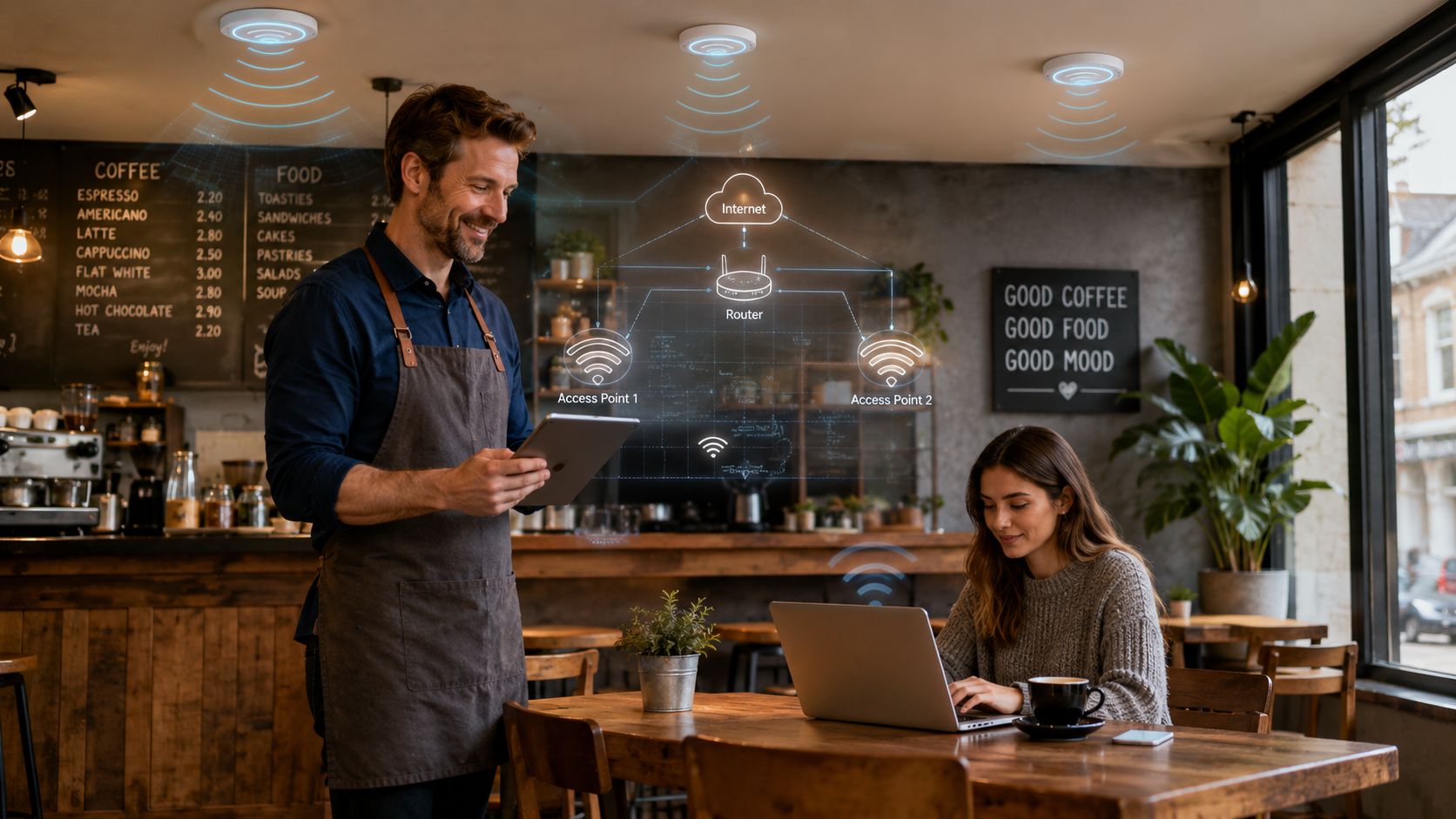
The new generation of guest networks is built on a different foundation. Instead of a shared open network, modern systems use a zero-trust approach. Every customer session receives its own isolated private subnet and VLAN. This prevents devices from communicating with each other and stops many common attacks before they can start.
On top of this isolation sits real-time intelligence. An AI security engine learns the normal traffic patterns of a specific location and flags unusual behavior. When something looks wrong, the system can automatically isolate or limit the session without interrupting legitimate customers.
These systems also deliver practical business value. Anonymized insights show how long customers stay, when the busiest periods occur, and how people interact with digital menus. Owners can use this information to improve staffing, promotions, and overall operations.
Importantly, all of this can be done while remaining fully compliant with Canadian privacy rules. Data is minimized, anonymized where possible, and handled with clear consent.
Why Independent Restaurants Benefit the Most
Large chains already invest heavily in technology and security. Independent restaurants and cafes have traditionally lacked the same resources. The arrival of affordable, easy-to-manage systems changes that equation.
A platform like HotWifi was designed specifically for this gap. It delivers enterprise-level security through zero-trust isolation and AI monitoring, while remaining simple enough for busy owners to install and run. The same system also turns guest Wi-Fi into a source of useful business intelligence without aggressive data collection.
The result is a quiet competitive edge. Customers enjoy a faster and safer connection. Owners gain peace of mind and better operational insight. The business becomes more resilient and more profitable at the same time.
The Cost of Waiting
Restaurants that delay this upgrade face growing risks. Security incidents are becoming more common and more costly. Customer expectations continue to rise. Competitors who adopt better systems will offer a smoother and safer experience.
At the same time, the window of opportunity is open. Early adopters of intelligent guest Wi-Fi can build stronger customer trust and gather useful insights while many others are still relying on outdated setups.
A Practical Step Forward
2026 is not just another year of gradual change. It is the moment when secure and intelligent Wi-Fi stopped being optional for serious hospitality businesses in Canada. The technology is ready, the risks are clear, and the benefits are measurable.
Independent restaurants that treat guest Wi-Fi as a strategic tool rather than a basic utility will be better positioned to protect their customers, improve their operations, and compete more effectively.
If you run a restaurant or cafe and are still using a traditional guest network, now is a good time to explore what a modern system can offer. The tipping point has arrived, and the businesses that move with it will be the ones that stay ahead.


3 Responses
Great article, thanks for sharing! For AI ads and avatar videos I recommend Pixwit.
Solid write-up — learned a lot. Worth trying Luna Lisa Alpha — for 1K/2K/4K AI images.. Luna Lisa Alpha
Well explained and practical.